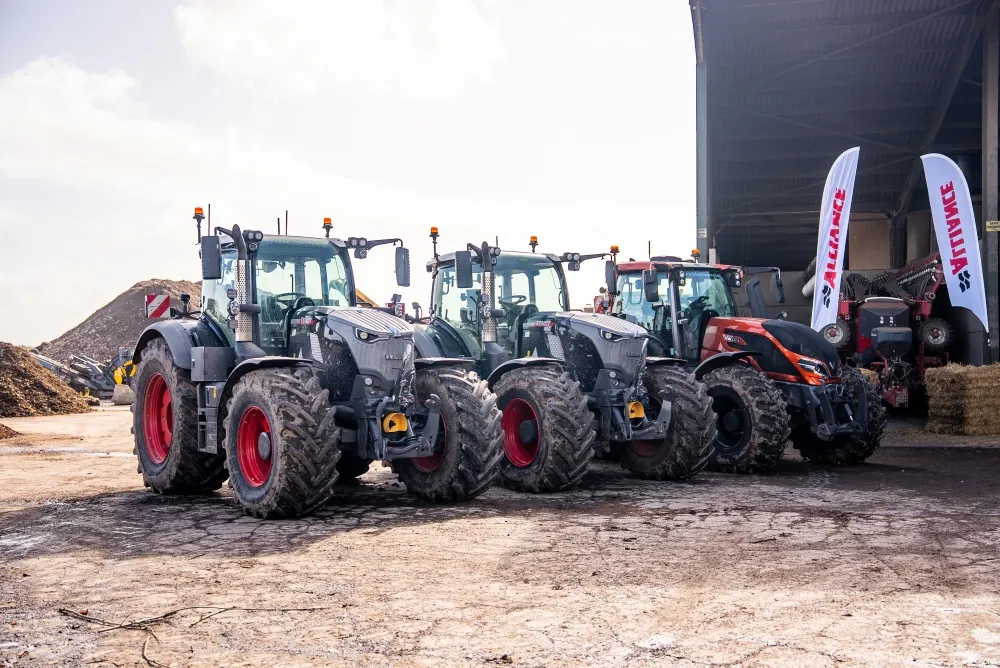
Alliance has recently launched Agri Nova, a new R-1 agricultural bias tyre, and Gerrit Vinkers, Field Service Manager at Alliance, has explained why the company decided to launch a bias tyre despite the continued shift towards radial technology in the latest episode of our CTB Tyre Talks Podcast series.
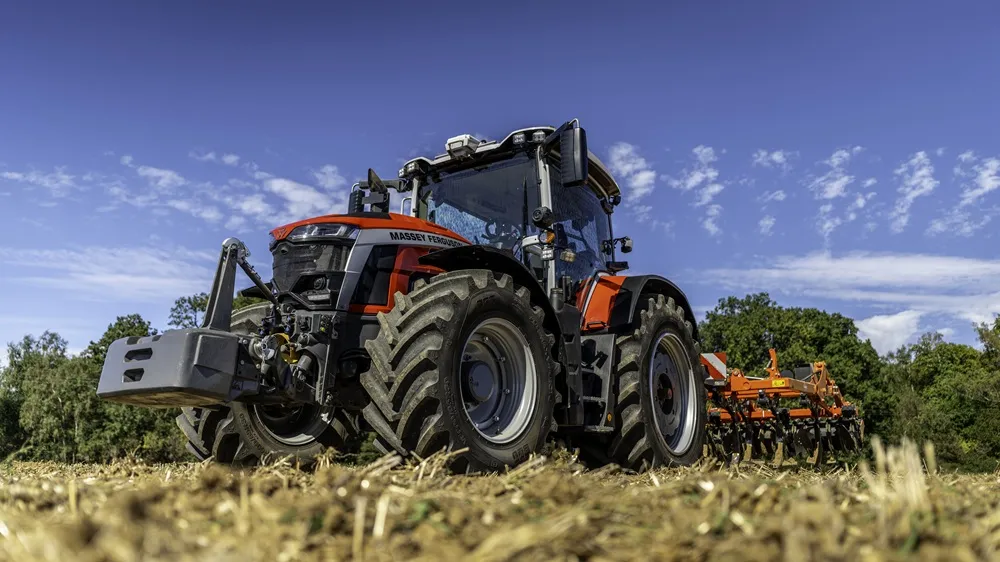
Launched earlier this year, Alliance Agri Nova is the next-generation R-1 bias tyre designed for light- to medium-duty tractors. According to Gerrit Vinkers, more than 90% of tyres in Europe now use radial tyres, but bias tyres still have a significant global market, with around 40% of tractor tyres in the US remaining bias, with an even larger share on a global level.
The Rationale Behind Alliance’s Bias Tyre Investment
“The world is certainly shifting towards radial, but there is still a solid market for bias tyres. From the farmer’s point of view, there are still applications where a bias tyre makes sense, particularly on secondary tractors and applications where soil conditions allow, particularly as soil carrying capacity varies throughout the year. That’s why we decided to introduce the Agri Nova,” Gerrit explained.
The initial feedback has been positive, with users being pleasantly surprised by the Agri Nova’s performance and modern look and feel. “We’ve applied our knowledge, compounds and technology to create a tyre that does the job effectively while offering a reasonable price compared with a standard radial tyre.”
The Agri Nova’s bias construction means it is somewhat stiffer than a radial tyre, since it uses more material in the sidewall. However, Alliance has focused on achieving a smooth ride through the tyre’s construction and tread design. The lugs on the new Agri Nova are positioned with sufficient overlap that maintains more continuous rubber contact with the road, which helps by minimising vibration and the rumbling sensation that can occur when there is wider spacing between the lugs, resulting in a comfortable driving experience.
Although Agri Nova is positioned as a cost-effective option, Gerrit stresses that choosing a tyre should still depend on soil conditions, machine weight and the work being carried out. Soil health is a year-round consideration and farmers need to avoid using a bias tyre when the soil does not have sufficient bearing capacity. Since diagonal tyres require higher inflation pressures compared to VF tyres for the same load, they can cause greater soil penetration in wet or weak conditions. However, on sufficiently firm ground, particularly with lighter tractors, the higher pressure is less of a concern. “Soil is dynamic; you have to decide: can I use the diagonal tyre or should I keep that one at home and run with radial or probably VF? When the soil is moist, or when the load capacity in the soil is not there, don’t go,” Gerrit explained.
Targeting Vintage Tractor Applications
Vintage and hobby tractors are another market for diagonal tyres that Gerrit pointed out. Owners restoring older machines can use tyres that match the technology and appearance of their vintage tractors while still benefiting from modern materials and construction. “There’s a whole market for vintage tractor enthusiasts who want to have the proper or matching technology with tyres on their machine, but with modern materials inside.”
Alliance launched Agri Nova with 110 SKUs to address the different requirements of markets around the world. However, not all sizes are intended for every region and certain specifications are tailored to markets in Central and Eastern Europe, India and the US. The range also accounts for differences in application, including whether the tyre is fitted to the front or rear axle, with rear tyres requiring higher load capacities and therefore potentially higher ply ratings. Gerrit estimates that around 70-80 of the SKUs could be relevant to Northwest Europe.
“The 110 SKUs need to be seen from a global perspective as different sizes are specific to different markets, while the range also reflects whether the tyre is used on the front or rear, with different load capacities and ply ratings required.”
When asked how this helps customers and dealers, particularly given the wide range of SKUs required across the European customer base, Gerrit explained that the goal is to ensure customers can make full use of their secondary and other tractors when they’re actually needed. “That tractor might only do 100 or 200 hours a year, but for those kinds of machines it’s absolutely relevant. It still needs decent shoes to do the job.” He added, this doesn’t mean every machine needs to be equipped for the most demanding conditions: “It doesn’t always have to carry wellies; flip-flops would be overkill, but it needs decent tyres to do the job when it’s called on.”
Having the Right Boots for Peak Season Demand
Gerrit pointed to cereal harvest season as a clear example of why this matters. “When cereal harvest comes around, there’s a lot of transportation to be done and when the window is narrow, everybody’s on edge,” he explained. While the harvester’s capacity is generally sufficient, he noted that, “the weak link in the chain is usually getting the cereals from the field into the shed and dried in time.” In those moments, every piece of equipment needs to perform. “That’s where this helps our customers. Giving them a friendly price to keep the machine operational, even if it’s only used 100 hours a year.”
Speaking about what technical enhancements give Alliance the confidence to back the Agri Nova with its best-in-class seven-year warranty, Gerrit pointed first to experience. “You only have to look at our track record,” he said. “Yokohama, our parent company, has over 100 years in the business; Galaxy and Alliance have 60 to 70 years between them. We know what the market demands.”
That heritage, he explained, is also part of the new tyre’s construction: “By using the same compound and materials in the Agri Nova that we us in our Agri Star II and Agriflex ranges, we can say with confidence ‘We’ll back it up with a seven-year warranty.’”
Gerrit also noted that the design philosophy behind the Agri Star II has carried through into the new range: “We took that same thinking and built it into the Agri Nova. It’s tough, it’s well made, and, as much as you can say this about a tyre – it’s a good looking one.”