Michelin purchases almost 750,000 tonnes of natural rubber annually and, according to the company, it now sources all its natural rubber worldwide from deforestation-free areas.
Improving Supply Chain Transparency
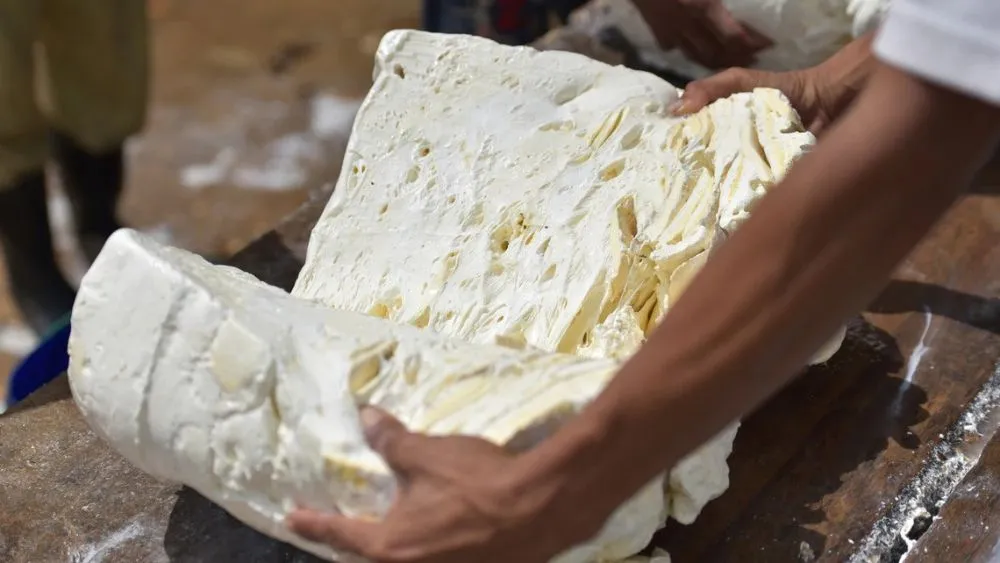
The material’s strength, elasticity, flexibility and grip properties make it essential to the performance, safety and durability of Michelin products. No synthetic material currently matches these characteristics. However, protecting this resource faces several challenges: rubber trees grow only in the hot, humid climate around the equator, and the supply chain is highly fragmented, with around six million producers managing plantations worldwide.
Michelin says it is applying the requirements of the forthcoming EU Deforestation Regulation (EUDR) across its global operations, going beyond the regulation’s geographical scope. The milestone follows years of work to establish full supply chain traceability and demonstrate that none of the rubber it purchases comes from deforested land.
Deforestation threatens local ecosystems and communities, while global demand for natural rubber continues to grow. In 2015, Michelin committed to purchasing only deforestation-free rubber. Since then, it has systematically assessed its supply chains to identify risks and sourcing locations, establish traceability systems, involve producers directly, analyse satellite imagery and geospatial data, and support suppliers and producers on the ground.
The company’s system now covers around 1.5 million producers and has mapped almost 2.5 million rubber plots. Michelin says this shows how it can implement deforestation-free sourcing on a global scale while meeting European legislation requirements.
Natural rubber is a renewable resource used in numerous everyday products. Around three-quarters of global production goes into tyre manufacturing, according to Michelin. It is also used in medical equipment, industrial components and a wide range of mobility applications.
Michelin says the EUDR can make a significant contribution to reducing deforestation, but argues that the transition requires cooperation across the entire supply chain, from producers, cooperatives and traders to manufacturers and public authorities.
The company maintains that the same rules must apply to all participants, both in Europe and globally, to ensure fair competition and prevent companies investing in responsible sourcing from being put at a disadvantage.
“The experience Michelin has gained in recent years shows that responsible sourcing requires significant investment, state-of-the-art technology and ongoing dialogue with local communities, associations and public authorities. Policymakers must enforce the rules fairly and effectively. This is the only way to prevent companies that are making a genuine commitment from falling behind. We must sustain this momentum together to ensure it has a global impact,” said Pierre-Martin Huet, Senior Vice President Sustainability at Michelin Group.