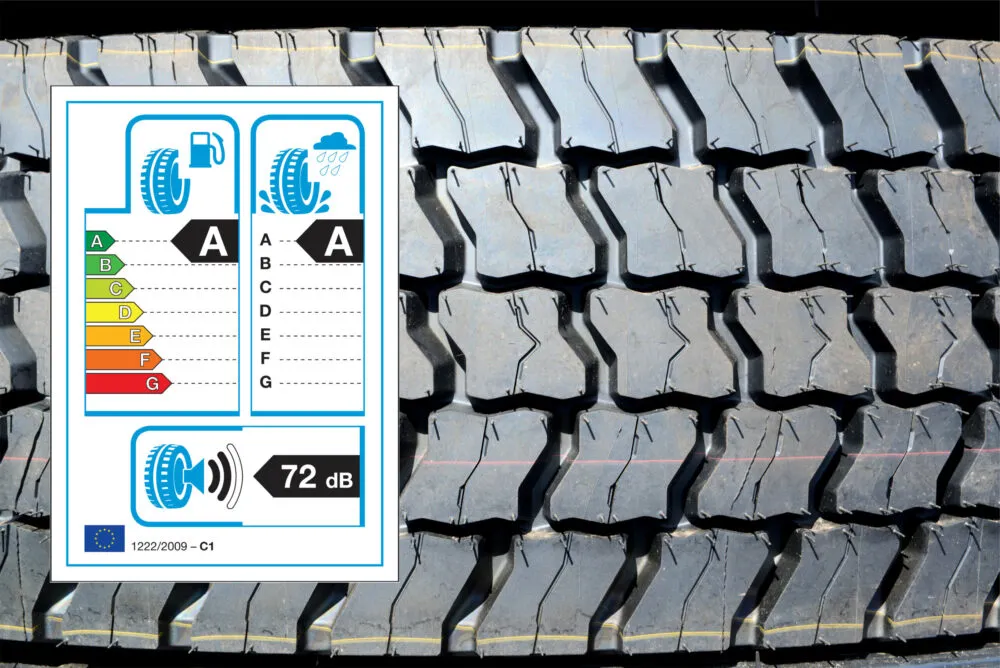
The long-running effort to introduce an EU label for retreaded truck and bus tyres has been an uphill struggle for European retreaders. It now appears unlikely to be completed in 2026, according to anonymous industry sources. Those sources suggest that 2028 is being discussed as the earliest realistic implementation point; however, we understand that there is also specific obstruction to the introduction of the label from within the tyre industry itself. Although the European Commission has not yet announced a formal postponement, we wanted to explore the consequences for retreaders if this is indeed the case.
While we know that BIPAVER has confirmed that retreaded tyres are set for full inclusion in the EU’s taxonomy regulations, we also know that the delays in retread labelling reflect ongoing concerns about the technical basis of the label, particularly rolling resistance, casing resistance, EPREL registration, and the methodology required to produce results robust enough for market surveillance and comparison with new tyres. However, for the European retreading industry, the issue is not simply technical. It affects how retreaded tyres are recognised, compared, procured, and financed in the EU market.
The current EU tyre label provides harmonised information for new tyres on fuel or energy efficiency, wet grip, external rolling noise, and, where applicable, snow and ice performance. For C3 tyres, used commonly on trucks and buses, the label is already mandatory for new tyres placed on the market. Retreaded tyres, however, remain outside the system.
Regulation (EU) 2020/740 anticipated their inclusion, but only once a suitable testing method was available. Article 13.2 required the Commission to adopt delegated acts introducing information requirements for retreaded tyres by 26 June 2022, provided such a method existed. That deadline passed because no suitable method was available. The industry then submitted a proposal in October 2022 for the labelling of retreaded C3 tyres, followed by an independent review by Applus IDIADA and further impact-assessment work by Viegand Maagøe for the European Commission’s Directorate-General for Energy.
The absence of an official label has created yet more market distortion for retreads in an already difficult market. Retreading is a circular manufacturing process, central to the business model of any fleet operator. Without an official label, retreaded tyres cannot be registered in the European Product Registry for Energy Labelling, or EPREL, in the same way as new tyres. This creates three linked disadvantages. First, fleet managers, procurement teams, and public bodies cannot compare retreads using the same standardised framework as new tyres. A premium retread with strong rolling-resistance performance is officially unrated. Second, low-cost new imports carrying even modest official label classes can appear more credible than an unrated retread, even where the retread may offer a better cost-per-kilometre, a lower material footprint, and a stronger circular-economy case. Third, retreads can be excluded from public tenders where label classes are used as administrative evidence for energy-efficiency or decarbonisation criteria.
This is the paradox facing the sector. EU circular-economy objectives favour reuse, resource efficiency, and waste reduction. Yet, in this case, a circular product can be disadvantaged because a single-life new tyre fits more easily into the existing information framework. Not only this, but it now seems that retreading is being disadvantaged from within the industry itself.
The technical problem is not a zero-sum game that would warrant not labelling a retread tyre. According to BIPAVER’s summary of the July 2024 review meeting with the Commission, IDIADA, the European Tyre and Rubber Manufacturers’ Association, and the European Tyre and Rim Technical Organisation, the industry proposal to retain the same labelling classes and bandwidths for rolling noise and wet grip as those used for new tyres was broadly confirmed. Rolling resistance is more complex. A retreaded tyre is not a single newly manufactured product. Its performance depends on the casing, the tread, and the retreading process. The casing can vary by manufacturer, size, construction, age, usage history, and condition. The same tread applied to different casings can produce materially different rolling-resistance results.
This appears to be central to the delay. If regulators simply applied the same rolling-resistance structure used for new tyres, every retreaded tyre might need to be tested individually to produce a fully representative value. For a sector made up of many small and medium-sized operators working with varied casing flows, that would be commercially unrealistic. The industry proposal and IDIADA review therefore point towards a specialised retread approach.
Knock-on Effects
This issue also affects the EU Taxonomy. BIPAVER has argued that retreaded tyres should not be penalised under taxonomy criteria because they are not yet included in EPREL. Recent Commission draft language would temporarily exempt retreaded tyres from certain tyre-label-related requirements, provided they are not labelled under Regulation (EU) 2020/740 and do not appear in EPREL. That may avoid an additional regulatory penalty, but it does not resolve the underlying market disadvantage that not labelling retreads could present for buyers who are not across the minutiae of European legislation.
The roadmap presented in July 2024 still pointed towards a possible 2026 outcome, including impact-assessment approval in 2025, interservice consultation, a possible WTO stage, Member State voting, adoption, and publication in the Official Journal in early 2026. That timetable now appears to have fallen away.
Based on publicly available information and recent industry discussions, the current situation is that the retread label is not being blocked by opposition to retreading itself. Given the complexities, getting it right is understandable, but the delays and any opposition are also damaging to the industry. Until a standardised, EPREL-compatible testing framework is finalised, European retreaders will remain disadvantaged in fleet comparison, green procurement, taxonomy alignment, and consumer information. Meanwhile, low-cost new tyres will continue to benefit from regulatory visibility that retreads lack.
If 2028 is now the earliest plausible implementation window, the next two years will be decisive. The Commission, Member States, technical bodies, and industry must resolve not only the politics of the label, but the measurement infrastructure behind it. Without that, Europe risks sustaining a market in which sustainable remanufacturing is encouraged in principle but penalised in practice, which is not only bad for retreading, but will end up having a knock-on effect on European tyre manufacturers who, all of a sudden, will find themselves without a completing CPK message to their fleet customers.