Hankook Tire is looking to accelerate its growth in the European truck and bus tyre market by combining increased local production with a broader range of fleet services and solutions.
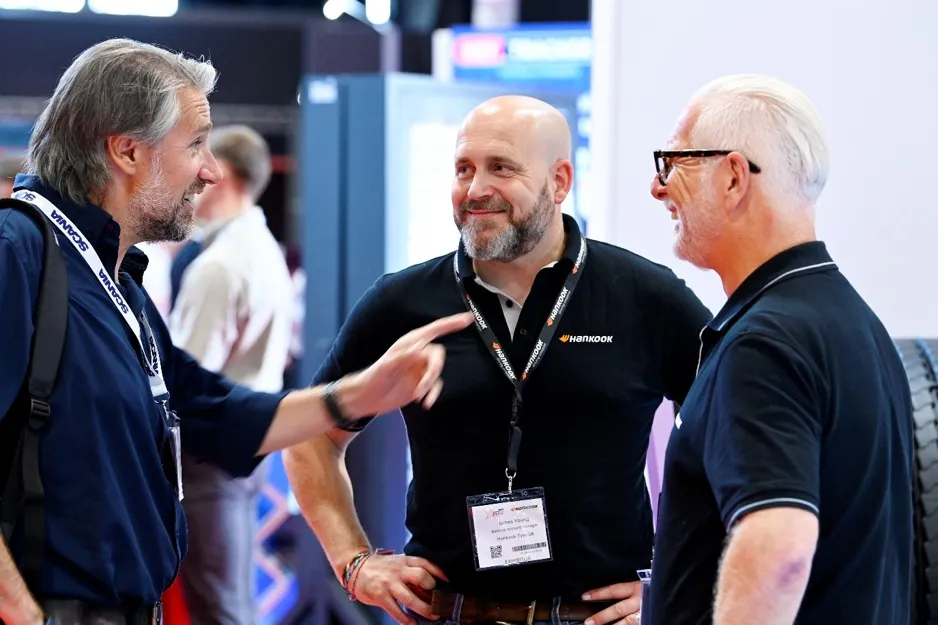
Speaking at the Road Transport Expo in Stoneleigh, Richard Bezzant, Marketing Director, Truck and Bus Europe at Hankook Tire, said the company’s priorities over the next few years centre on growth, strengthening its position in Europe and developing closer relationships with both distribution partners and larger fleets.
“The first thing that we have to think when we think about our strategy is about leading, about growth in Europe and really securing our position within the European TBR sector,” Bezzant said.
The company has made significant investments to support that objective, most notably the construction of a new truck and bus tyre factory in Hungary. The facility is scheduled to begin supplying tyres to European markets in 2027 and will have a full production capacity of 827,000 tyres per year.
For Hankook, the plant represents more than an increase in European production capacity. It is intended to bring the company’s latest technology closer to its European customer base while reducing lead times and inventory requirements.
Building European growth
Bezzant said Hankook had made a strong start to the year, with both market share and volumes increasing across Europe.
The company’s growth strategy is increasingly focused on larger fleets, where customer requirements are becoming more sophisticated and where there is greater potential to offer integrated tyre and service solutions.
“Traditionally, our business has been grown step by step, piece by piece, from working with our distribution partners, working with the medium-sized and more local fleets,” Bezzant explained. “Our next step of our growth is really opening those wider offers to bringing to our fleet partners and future fleet partners full offers of tyre management and all of those things that will help us to maintain our growth strategy as we move forward.”
This represents an evolution in Hankook’s approach rather than a replacement for its established distribution model. Dealers and distributors remain an important part of the company’s route to market, but Hankook is increasingly looking to complement the traditional product-focused relationship with service capabilities.
The objective is to provide fleets with solutions that go beyond the supply of new tyres, particularly where larger operators are looking to outsource elements of tyre management.
The new Hungarian plant is central to this strategy. Bezzant confirmed that the project remains on schedule, with tyres expected to enter the market from 2027.
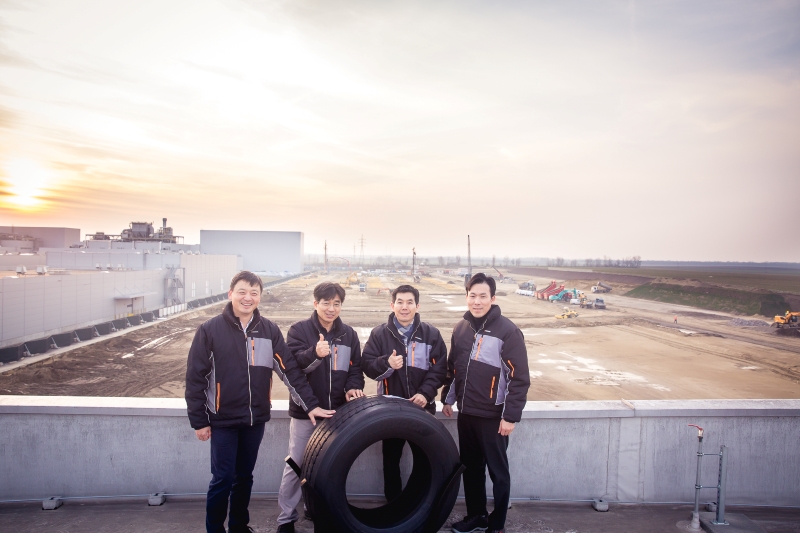
At full capacity, the factory will produce 827,000 TBR tyres annually. According to Bezzant, this represents a significant proportion of Hankook’s European requirements, although the company already consumes more tyres in Europe than the plant will ultimately produce.
“The products coming out of that plant will be our newest technology products,” he said. “So, we are making sure we have all the new technology coming into Europe, and it’s really about that investment of over €500 million and around bringing the production closer to our customer base.”
Europe accounts for nearly 40% of Hankook’s TBR tyre consumption globally, making the decision to establish additional production capacity in the region strategically important.
Local production is expected to allow Hankook to reduce lead times and inventory requirements while increasing the speed at which new products can reach European customers.
The investment is also closely connected to the company’s sustainability objectives, as reducing the distance tyres have to travel before reaching European customers can lower the associated carbon footprint.
Developing the service network
Hankook’s relationship with its distribution network is also evolving as the company expands its fleet proposition.
Historically, the company has worked with distributors to place its products in the market, with sales teams and distribution partners engaging directly with fleets. The next stage is to build a wider service network around that existing structure.
“As we take the next steps, it’s very much around having service partners as well,” Bezzant said. “So, to complement everything we have, we have to have our service partners and build a true service network.”
One element of that network is Road Assist 24, Hankook’s European breakdown network, which enables the company to bring European breakdown business to its partners.
In the UK, Hankook is also beginning to introduce managed contracts as part of its broader service offering. These are intended to provide additional support to distribution partners while giving fleets access to a more comprehensive package of services.
Bezzant highlighted a number of areas in which Hankook is looking to support its partners, including stock availability and delivery, retread solutions and additional products.
The objective is to ensure that distributors can meet the requirements of both larger fleets and their wider customer base.
“It’s about supporting our partners by bringing them service work and making sure that it’s easy to get hold of stock and deliver it to them so it’s always available. It’s also about giving them retread solutions to then be able to give all those needs to the customer, and bring other products to make sure the portfolio is completely there,” he said.
Sustainability linked to product performance
Sustainability is another area in which Hankook is looking to develop its offering, although Bezzant sees it as closely linked to the company’s wider commercial and product strategy.
Local production in Hungary is one part of this approach, reducing the transportation requirements associated with supplying the European market.
However, Bezzant stressed that manufacturing and logistics represent only part of the environmental impact of a tyre.
“We know that 85% of the environmental impact of a product is in its use phase, not in the manufacturing,” he explained.
Consequently, Hankook is focusing on areas such as rolling resistance and fuel efficiency, as well as the use of recycled and reused materials.
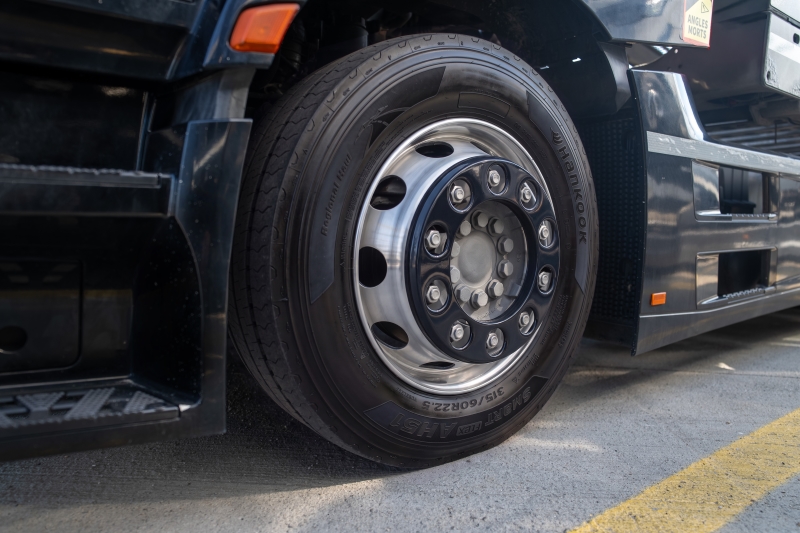
The company has recently introduced the TL50, which Bezzant described as Hankook’s first A-rated trailer tyre and its first triple-rated tyre. This forms part of a broader long-haul range focused on energy efficiency.
Hankook is also working on the material composition of its tyres, with the aim of increasing the proportion of reused and recycled materials while ensuring that those materials are sourced sustainably.
Retreadability is another part of the company’s approach. Bezzant acknowledged that the retread market remains challenging but argued that retreading needs to form part of a broader fleet proposition.
“We have a strong retread offer today. Our casings are all retreadable. We’re improving the structure of our casings to increase those acceptance rates constantly,” he said.
The wider objective is to maximise the useful life of each tyre. According to Bezzant, tyre mileage remains one of the most important factors in reducing environmental impact.
“In the end, the longer a tyre is on a vehicle, the less environmental impact it makes,” he said. “The longer that lasts, the better mileage that tyre does. The better managed that tyre is in terms of its pressure, the less impact it will always have.”
For Hankook, therefore, sustainability encompasses manufacturing, materials, retreadability, rolling resistance, tyre management and ultimately the length of time a tyre remains in service.
Two-brand strategy
Alongside its premium Hankook brand, the company also operates the Laufenn brand, which has a specific role within the overall portfolio.
Bezzant explained that Laufenn has been introduced to strengthen the company’s ability to address different customer requirements while maintaining a clear distinction between the two brands.
He compared the approach with the airline industry, where customers can choose between different levels of service depending on their requirements and budget.
“Everybody has different needs and different wants, and that’s really where these products fit in,” he said.
Laufenn is positioned around core performance and mileage, giving distribution partners a product range that can meet the requirements of customers seeking a straightforward and dependable tyre proposition.
“At the same time, we have our Hankook brand, which then gives that extra piece on top, more mileage, more technology, and those types of things,” Bezzant said.
The two-brand strategy therefore allows Hankook to address a broader section of the market without changing its positioning at the premium end.
Full portfolio on display
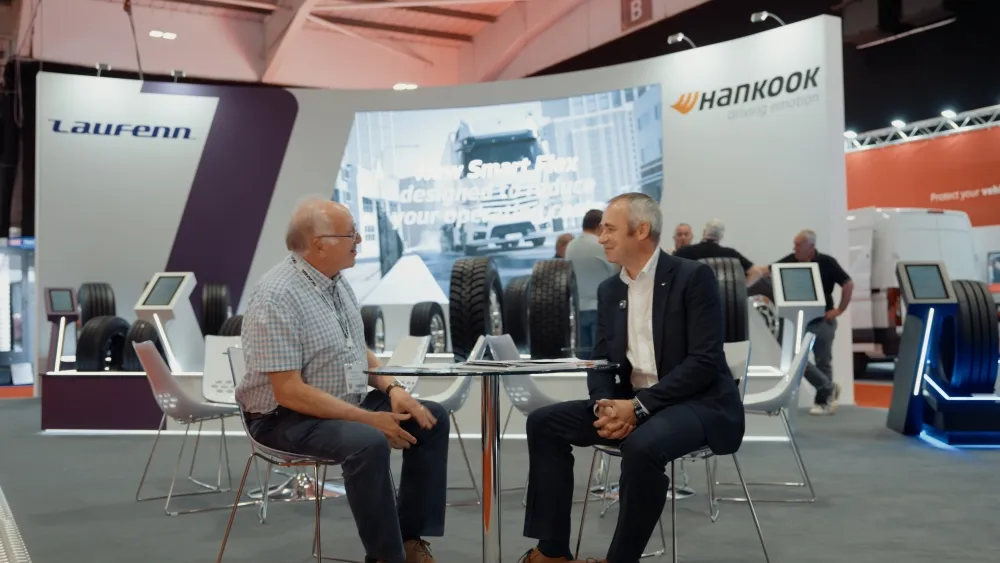
The Road Transport Expo provided Hankook with an opportunity to demonstrate how its product and service portfolio is developing.
Bezzant described the event as the largest UK show of its type and particularly important because of its proximity to the company’s existing and potential customers.
The focus of the Hankook stand was therefore on demonstrating the company’s complete offer rather than concentrating on a single new product.
The display included the company’s retread products and the latest TL50 trailer tyre, alongside Hankook’s long-haul range.
Hankook’s AL50 and DL50 products were also being promoted, these being positioned as hybrid products intended to combine mileage with fuel efficiency. At the same time, the company’s core AH51 and DH51 products were also on display, together with the TH31 regional tyre, which is focused on mileage performance.
Alongside the physical tyre range, Hankook was also using the event to discuss its developing fleet management proposition in the UK. With this in mind, the company has launched management offers incorporating services such as central billing, adding another element to its strategy of providing fleets with a more complete package.
The bus sector is also becoming increasingly important to Hankook, particularly as the transition towards electric vehicles gathers pace. It was therefore no surprise to see the company once again displaying its dedicated EV bus tyre, which was first introduced at RTX 2025.
“This follows our PCR tyre strategy, where we have our iON tyre dedicated towards EV vehicles, because we believe at Hankook that you have to have the right tyre designed to do that job,” said Bezzant.
“For us, compromise is the thing that you have to do last. It’s about making sure it’s designed to do what’s needed.”
Looking ahead
Hankook’s European strategy will continue to develop through the remainder of the year and into 2027, with a series of major industry events providing opportunities to present the company’s expanding product and service proposition.
The company will exhibit at Euro Bus later in the year and will also return to IAA Transportation in September. Bezzant highlighted the latter as particularly significant, as it will be Hankook’s first appearance at the event since 2018.
The return comes at an important stage in the company’s European development, with the Hungarian factory providing a major part of the story alongside new products and a new winter range.
“Going back to our strategy and what we want to achieve, it’s the first time since 2018 that we will have been at IAA,” Bezzant said. “We’ll have the factory to talk about. We’ll have new products to talk about. We’ve got a new winter range, and we’ve got new products to bring to market.”
For Hankook, the combination of European production, an expanding product portfolio, greater emphasis on fleet management and a developing service network is intended to provide the foundation for the next phase of growth.
The company’s objective is not simply to increase tyre sales, but to establish a broader role in supporting fleets and distribution partners across the European truck and bus market.
As Bezzant put it, the strategy is ultimately about “being in the right place to demonstrate where we are, what we are, and really drive our business forward.”