For Continental, the idea behind digital tyre management is quite simple: most of the expensive things that happen to a fleet’s tyres could actually be avoided, if someone catches them in time. “Predictive maintenance is a huge cost saving opportunity for fleets,” says Ian Jackson, General Manager for Technical Services at Continental Tyres. “A lot of expense can be incurred in emergency, roadside or ad-hoc call-out service appointments” – to say nothing of the safety risk of a vehicle stranded at the roadside in the first place.
That “Catch it before it becomes an emergency” philosophy runs through everything Continental has built into its ContiConnect platform.
Two Products, One Path
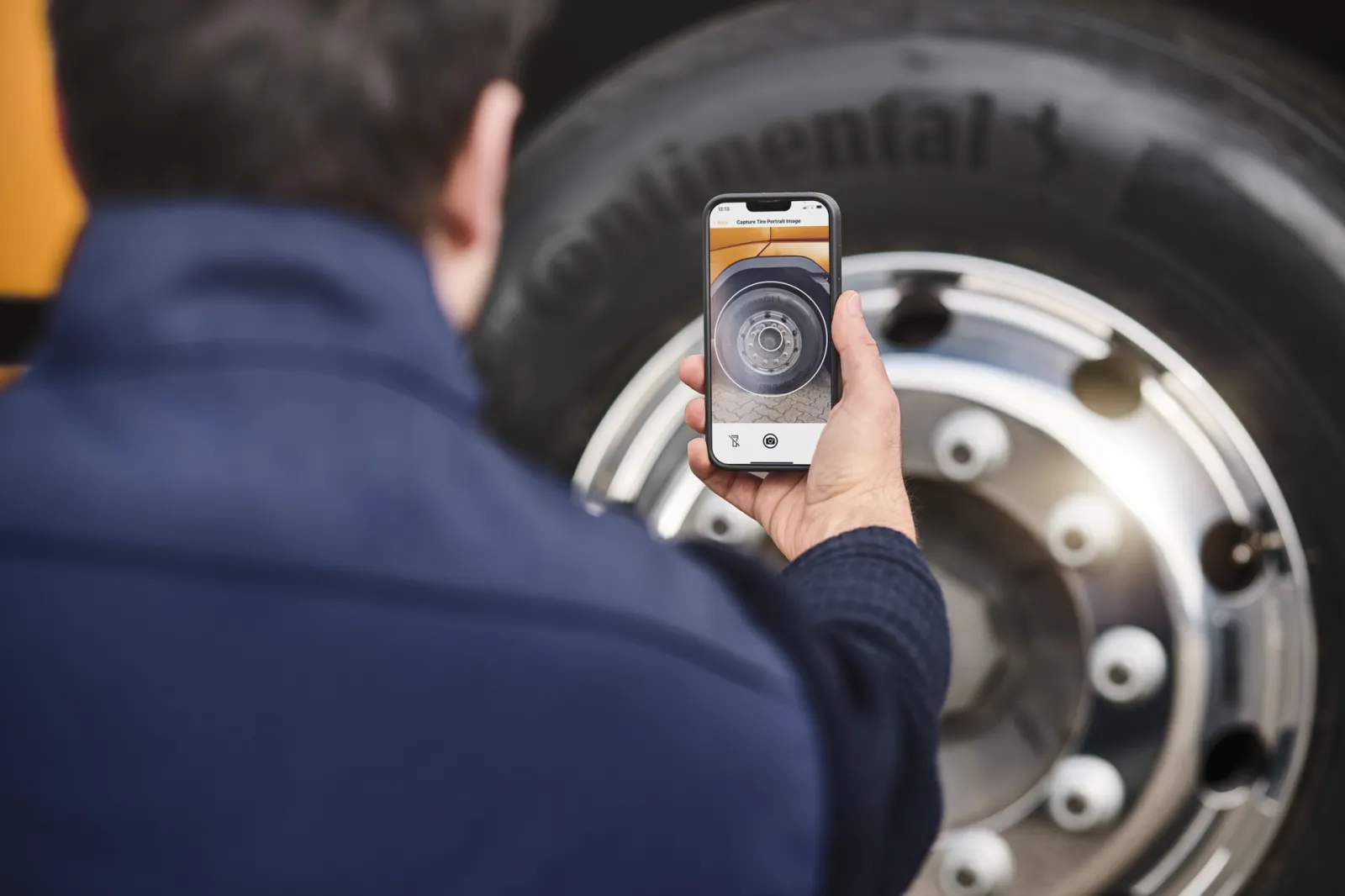
ContiConnect isn’t a single piece of software, but more like an entry point that grows together with a fleet’s ambitions. ContiConnect Lite is at the accessible end, representing a free-to-use app for any operator running Continental’s in-tyre sensors. It reads sensor data over Bluetooth, is easy to set up and gives the operator the tyre health information directly in their hands – enough, Ian says, to build a working picture of tyre condition and stay on top of scheduled maintenance, which lowers the chance of expensive, unplanned servicing later.
From there, the platform can be scaled up further. By adding a ContiYardReader, data collection becomes automated across the whole fleet rather than vehicle by vehicle, and for the operators who want the complete picture, there is ContiConnect Pro, which is Continental’s fully automated monitoring system: it keeps track of tyre health data, including wear, and adds on top predictive maintenance guidance, real-time safety alerts and performance reporting, making it suitable for fleets of any size.
Catching a Slow Puncture Early
When asked where the biggest financial return comes from – fuel economy, tyre life or reduced maintenance – Ian doesn’t pick one. In his opinion, all these categories are tied together by the same underlying mechanism: catching failures as they begin rather than after they’ve happened.
The example Ian used is a slow puncture. “Identifying it early means there’s a chance of repair, helping extend the tyre’s useable life. It also allows a judgement call to take place. A workshop could decide, if the deflation is minor and can be managed, to keep the vehicle in service until the end of the day to ensure duties are fulfilled and a kneejerk, cost-incurring emergency repair is avoided. That tyre may then be suitable for a repair, rather than replacing,” Ian explained.
Continental’s own published figures support the scale of the opportunity: on its website, the company shows operators optimising close to half of their fleet operating costs, saving more than $600 per vehicle annually and gaining a 1% increase in fuel efficiency through digital tyre management, although as with any such figures, results vary by fleet size, conditions and practices.
Made to Connect, Not to Replace
When talking about whether ContiConnect wants to become a fleet’s core management system, Ian directly explained: it is made to connect with what is already there. “ContiConnect is a flexible system and its open programming interfaces (APIs) enable easy data integration into existing systems,” Ian said. So, for Continental, tyre intelligence is something that improves the existing fleet software, not something that replaces it.
Fleet managers often complain about having too much data across many different systems, and Continental’s answer relies mostly on sorting rather than giving even more information. ContiConnect gathers tyre data and creates recommendations on its own, but in a busy transport office, the system is built to put alerts first, before dashboards – push notifications, a bit like a text message, that point out things such as a sudden deflation or a tyre that should be checked soon.
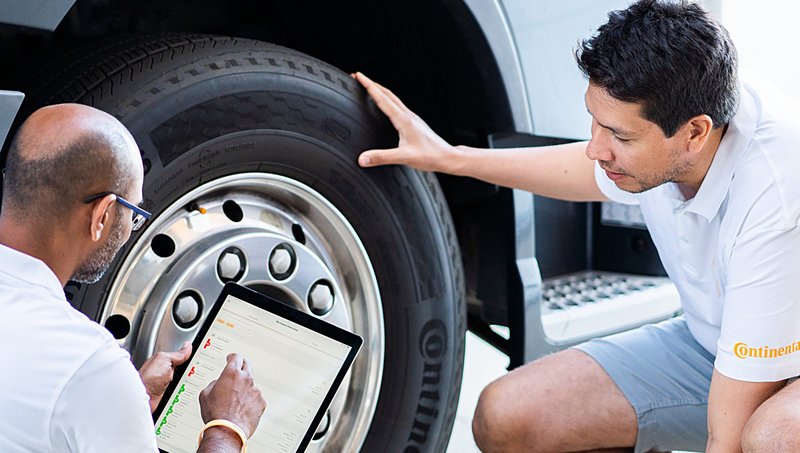
“ContiConnect is set up to prioritise automated alerts and recommendations. These help to cut through the noise and allow an immediate response to be taken. These push notifications, similar to a text message alert, could be for a sudden deflation event or to highlight a tyre that should be inspected at the next opportunity. Alerts are triaged as red, amber or green based on the urgency required,” Ian said. Thanks to this colour-coding, a fleet manager can see at a glance what needs to be dealt with right away and what can wait until the next scheduled check.

Support That Follows the Product Level
The support given for implementation depends on which product a fleet has opted for. Customers who choose ContiConnect Pro work closely together with a Continental contact who is assigned to them to help with a smooth deployment and continued support for the whole length of the subscription, while ContiConnect Lite users get their support through the free mobile app itself.
ContiConnect Lite is completely free for operators whose tyres are already equipped with Continental sensors from the factory. “While there is, of course, some upfront spend to implement ContiConnect Pro, it’s important to view the system not as an expense, but as an investment. Operators can begin to realise the benefits of ContiConnect Pro soon after deployment. The solution can help support tyre life and reduce vehicle downtime, which may contribute to operational cost savings over time,” Ian explained.
Continental’s own customer stories seem to support this idea. On its website, the company shared a story of Bruno Duretta, a fleet manager who looks after more than 5,000 tyres at Bus Company SRL, explaining that he cannot imagine a better way to manage a fleet of that size.
Andy Baum, Managing Director of Klaus Baum Logistik, explains that in an industry where pricing pressure never really goes away, using digital tools to keep costs under control “can be the key to success.”
So, it becomes clear that Continental is a company whose whole pitch depends on timing: the very same tyre problem can cost very different amounts, depending on whether you catch it as a small alert or you find it once it has become a roadside emergency. The job of ContiConnect is, in the end, simple: making sure it’s the first one, and not the second.