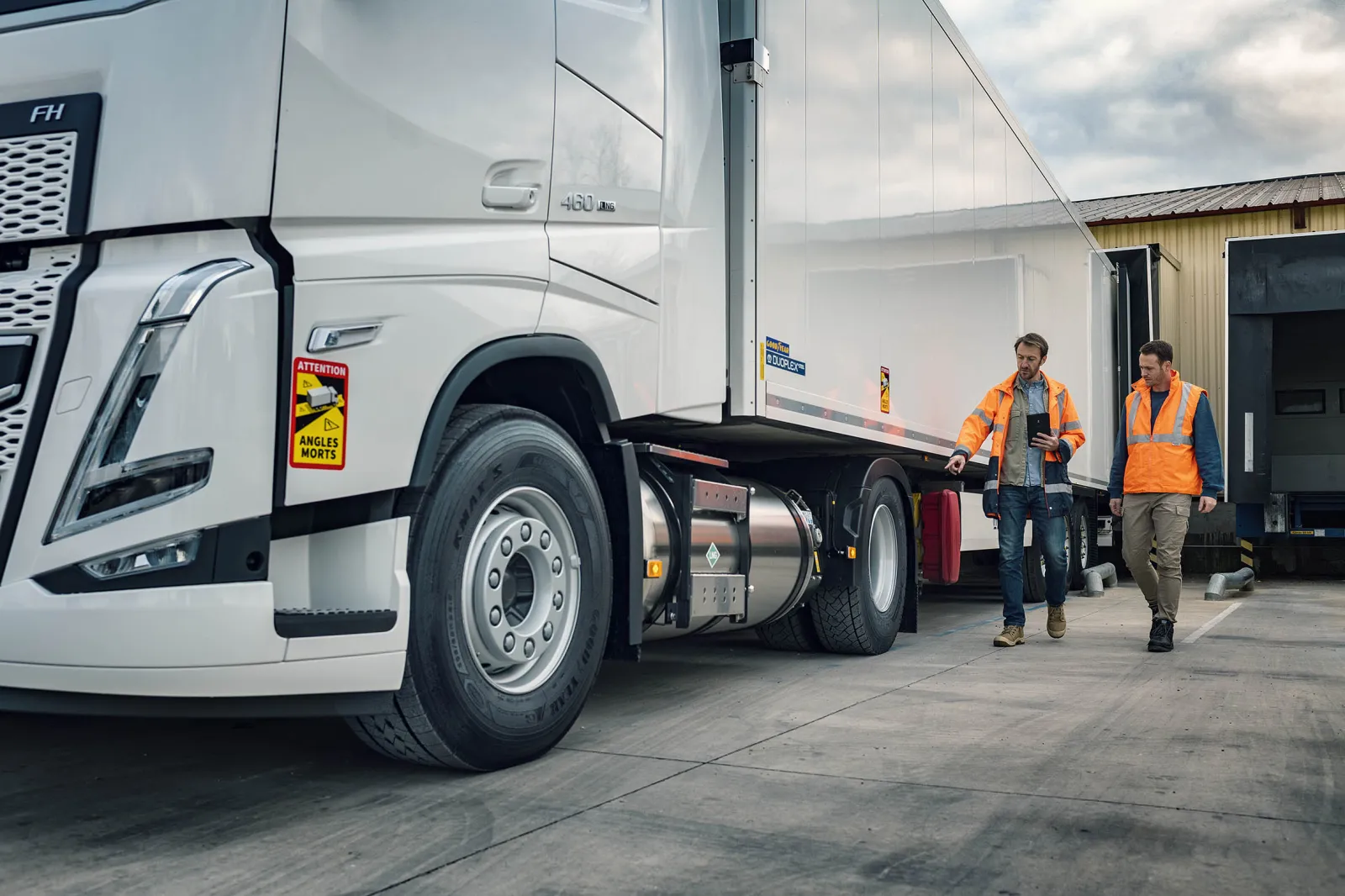
When you ask people what Goodyear does, most of them will give you a simple answer: tyres. But spend 10 minutes talking to the company about where it sees its business heading, and a different picture will emerge – one built as much around data, software and predictive analytics as it is around rubber compounds.
“We should really try to send the message that we position ourselves as a mobility solutions provider that combines tyres, connected technologies, predictive analytics and service expertise to improve fleet performance,” explains Moreno Ceccarini, Product Manager – DrivePoint & TPMS Goodyear. We spoke to Goodyear to find out what that actually means in practice: how its platform works, where the money gets saved, how it fits alongside the systems fleets already run and where AI fits into all of it.
One Dashboard
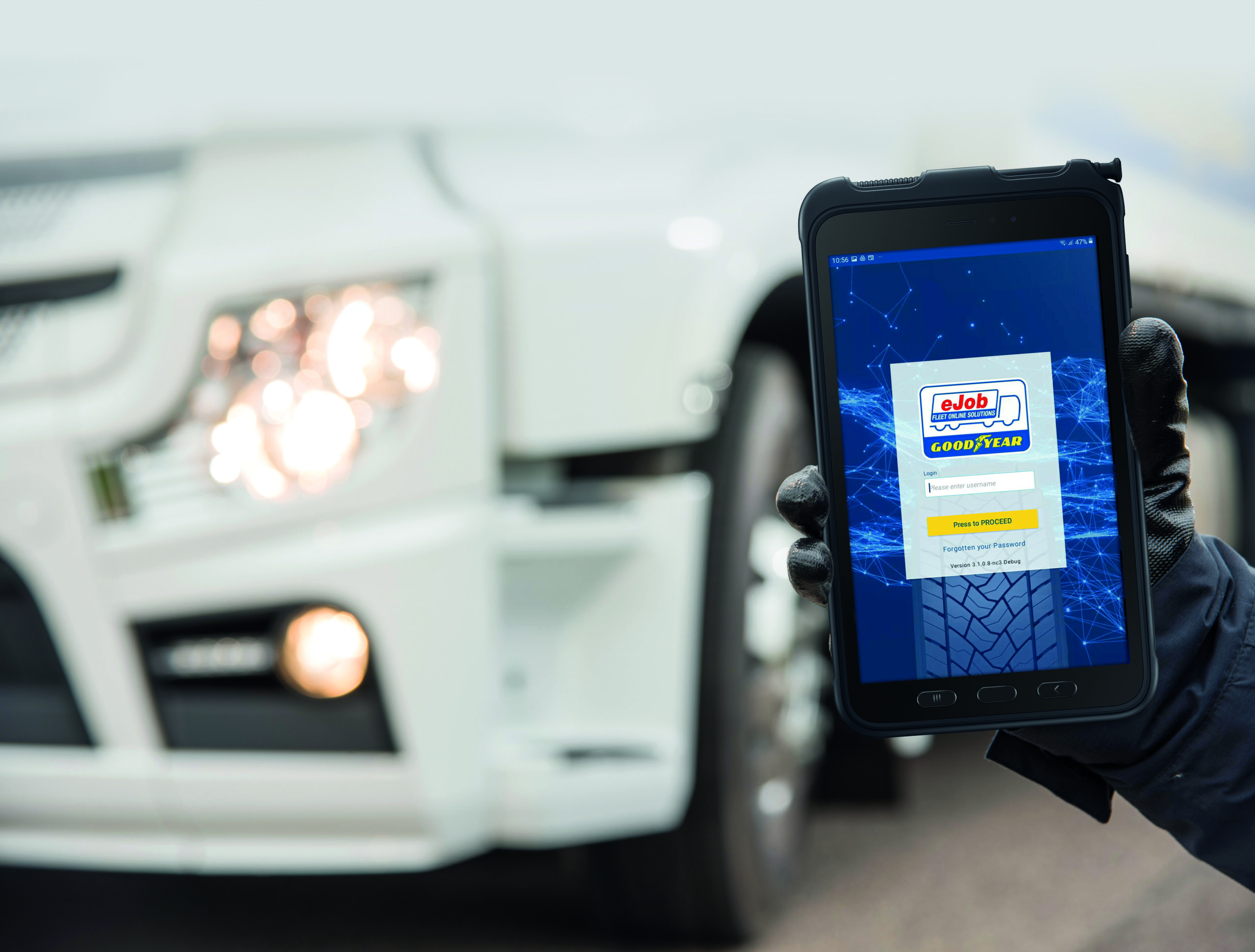
The main focus of the company’s offering is the Goodyear Total Mobility Environment – a suite of connected applications rather than a single piece of software. The main interface, Goodyear FleetHub, is built for managers and available on both web and mobile. DriversHub is developed for drivers, TechHub is for technicians and eJob is for tyre-related service jobs.

The suite is designed to give a fleet a single view of fleet health: near real-time monitoring of pressure, temperature, mileage and location, automated reporting and geofencing and track-and-trace capabilities. TPMS Connect feature pulls multiple data sources into that one operational view under a single login.
The more interesting part is what happens behind that dashboard. According to Moreno, Goodyear uses its own algorithms to prioritise exceptions and recommend actions, with a goal being that a fleet manages isn’t scrolling through every vehicle in the fleet looking for problems, but is instead pointed into that one operational view under a single login.
Where the Savings Actually Come From
Moreno identified three overlapping factors that actually save money when it comes to tyres, rather than a single silver bullet.
The first one is extended tyre life. “Detecting slow leaks early helps prevent irregular wear and premature removals. For most fleets, tyre life extension is one of the largest and most consistent sources of savings,” Moreno explained.
The second factor is reduced downtime and maintenance cost. Predictive monitoring is what allows a fleet to move from reactive maintenance (fixing things after they break) to a proactive maintenance, catching problems before they turn into an accident on the road.
The third one is fuel efficiency. Underinflated tyres increase rolling resistance, which then increases fuel consumption and emissions. Keeping tyres at optimal pressure improves fuel performance as a natural side effect of monitoring for other reasons entirely.
However, none of these factors work on their own, Moreno argues. “We can confidently state that the strongest business case usually comes from the combined effect of longer tyre life, fewer breakdowns, lower maintenance costs and improved fuel economy.”
Rethinking the Workshop Visit
Workshop routines and manual tyre inspection are their own cost centre, and Goodyear’s argument is that the traditional model that includes manual, periodic checks is inherently limited. A tyre problem that develops the day after an inspection will basically not be caught until the next one.
Continuous monitoring changes that situation. Rather than checking every vehicle on a fixed schedule regardless of its actual conditions, technicians can work from a prioritised list of vehicles that genuinely need intervention, supported by digital inspection records and automated flagging. The result, Moreno explains, is less time spent on inspections that turn up nothing and better-planned workshop resourcing overall.
A Plug-In, Not a Replacement
A natural question for any fleet already running established management, telematics and ERP systems is whether a new platform is meant to sit alongside them or replace them outright. Goodyear is clear on this point: FleetHub is designed to integrate, not to displace.
“Most fleets already operate established fleet management, telematics, maintenance and ERP systems. Our goal is to enhance those ecosystems by providing specialised tyre intelligence and connected mobility insights,” Moreno explains.
Goodyear focuses on delivering expertise in one of the fleet’s most important but often under-managed assets: tyres. “We are truly adopting a long-term vision and strategy where we aim to build a connected fleet mobility ecosystem that links tyre health, vehicle data, service workflows and operational visibility. However, we believe open integration and interoperability remain essential because fleets increasingly operate multi-vendor technology environments. Therefore, we are also capable of satisfying fleets’ requests when it comes to forwarding data into their very own software tool, via API,” Moreno added.
Fighting Portal Fatigue
Perhaps the most relatable problem facing today’s fleet manager isn’t a lack of data; it’s an overwhelming surplus of it, scattered across a growing number of apps and portals. Goodyear’s starting premise is that fleet managers don’t need more data; they need less of it, but better targeted.
That means leaning on predictive analytics to surface emerging issues before they escalate, prescriptive alerts that recommend a specific next action rather than just flagging a number out of range, and an exception-based approach where attention is reserved for vehicles that actually need it.
“Via our ‘Goodyear TPMS Connect’ offering, our solutions are designed to integrate with existing vehicle and telematics data sources, including OEM-connected vehicle environments and third-party platforms where appropriate,” Moreno says, while pointing out to the EU’s R141 regulation, in force since July 2024, as a significant driver reshaping how tyre pressure monitoring data is generated and shared across the industry.
Implementation and ROI
Implementing connected tyre technology isn’t free, and Goodyear is candid about the fact that hardware implementation requires upfront investment. Onboarding, deployment planning, training and operational guidance are all part of what the company offers to smooth that transition, with the goal of getting from installation to measurable results as quickly as possible.
However, Moreno says, ROI depends on fleet size, vehicle utilisation, current maintenance practices and annual mileage, and it varies accordingly. What is consistent is that the earliest returns tend to show up as fewer emergency incidents, more efficient workshop operations and better visibility into how tyres are actually performing. “The strongest ROI is usually achieved when fleets fully integrate connected tyre monitoring into their day-to-day maintenance processes rather than treating it as a standalone technology. And as such, it also requires efforts and changes on fleet level to maximise benefits,” Moreno explains.
About AI
“AI is becoming increasingly important because fleets generate enormous quantities of vehicle and operational data,” Moreno says. The volume of data fleets generate has made some form of AI-assisted interpretation increasingly necessary, but the goal today isn’t to replace fleet managers’ judgement but to help them prioritise it.
Goodyear points to three current applications: predictive analytics that help identify risks before failures occur, automated data interpretation that reduces the effort required to analyse fleet data and decision support that recommends actions based on patterns detected across vehicles.
Looking ahead, Moreno expects AI assistants to play “a larger role by helping fleet managers quickly understand fleet status, investigate issues and identify optimisation opportunities through natural language interactions.” It’s an area, Moreno notes, where Goodyear is actively investing time and effort.
Not Just for Big Fleets
A recurring concern with connected fleet technology is that it’s designed with large fleets in mind, leaving smaller operators priced out or overwhelmed. Goodyear’s response is to focus on modularity: solutions that can be adopted step-by-step, entry-level offerings focused on the highest-value use cases and automated reports and alerts that minimise administrative effort.
“The key is simplicity. A fleet of 20 vehicles should benefit from connected tyre intelligence just as much as a fleet of 2,000 vehicles. For SMEs in particular, fast ROI often comes from preventing just a handful of costly breakdowns, extending tyre life and improving maintenance efficiency. We therefore focus on practical outcomes rather than overwhelming users with excessive data or functionality,” Moreno explains.
Goodyear’s approach shows a company trying to shift how it’s perceived – from a tyre manufacturer to a provider of an intelligence layer integrated into them. Whether fleets adopt that framing will likely depend on the numbers: fewer roadside incidents, longer-lasting tyres and dashboards that let fleet managers know what to do next rather than simply what happened. On that front, Goodyear seems confident that the data will speak for itself.