In our feature series on retreading ZC Rubber were keen to discuss their views on the process and its benefits
ZC Rubber embraces retreading for growth
The company spokesman said: “ZC Rubber (Zhongce Rubber Group) regards retreading as a safety-led, quality-controlled extension of commercial tyre life—particularly for CV and bus applications where whole-life tyre costs matter as much as the initial purchase price.”
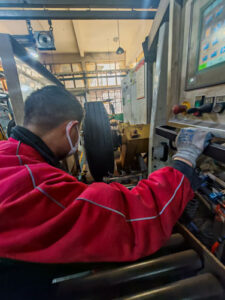
As with all processes, the outcome depends upon the quality of the input and ZC Rubber continued: “Our retread policy starts with strict casing selection. Only casings that meet defined acceptance criteria enter the process. Each casing is screened through multi-stage inspection, combining initial visual checks with non-destructive evaluations (including laser-assisted inspection and puncture checks) to identify damage or structural concerns. Casings that do not meet requirements are removed from the workflow. Approved casings are then prepared and repaired as needed, before a new tread is applied under controlled bonding and curing conditions. Each tyre then undergoes final verification, including a high-pressure inflation and leak check, before release.”
Whole life tyre costs have often been seen as a policy restricted to the premium brands, and promoted by those brands. However, ZC Rubber is now one of the world’s leading producers of CV tyres and they are taking on board whole life costs in a strategy to compete at the highest levels.
“Retreading is an essential lever in total cost of ownership,” said ZC Rubber. “. A retread typically costs around 30–50% of a new tyre while recovering about 80–90% of performance (application- and casing-dependent). When duty cycle and casing condition allow, two to three retread lives can more than double total casing mileage, reducing tyre cost per kilometer for fleets.
“Retreading also supports resource efficiency and sustainability. Reusing the casing retains around 70% of the original materials, reducing demand for rubber, steel, and petroleum-derived inputs and can deliver around 4–5x lower associated carbon emissions than producing a new tyre. Extending casing life also helps cut end-of-life waste, supporting circular-economy goals.”
Of course, retreading has a legacy reputation to overcome and ZC Rubber reinforces the need for attention to quality throughout the process.
They say, from a reliability and operations standpoint, modern retreading uses standardised processes and testing (e.g., strength, balance, and high-speed durability), and can be matched to duty cycles through appropriate tread designs and compounds (such as wet-grip or low-rolling-resistance priorities).
ZC Rubber added; “It also encourages full-life tyre management—routine checks for pressure, wear and damage, planned retread timing, improved uptime, and reduced reliance on new-tyre supply cycles. In many mature markets, retreading is widely adopted in commercial transport, and it is also standard practice in aviation, underscoring its role in managing whole-life tyre costs and sustainability.”
In short, ZC Rubber combines disciplined casing selection, rigorous inspection, and robust final verification so customers can capture both economic and environmental value over the tyre’s full life.