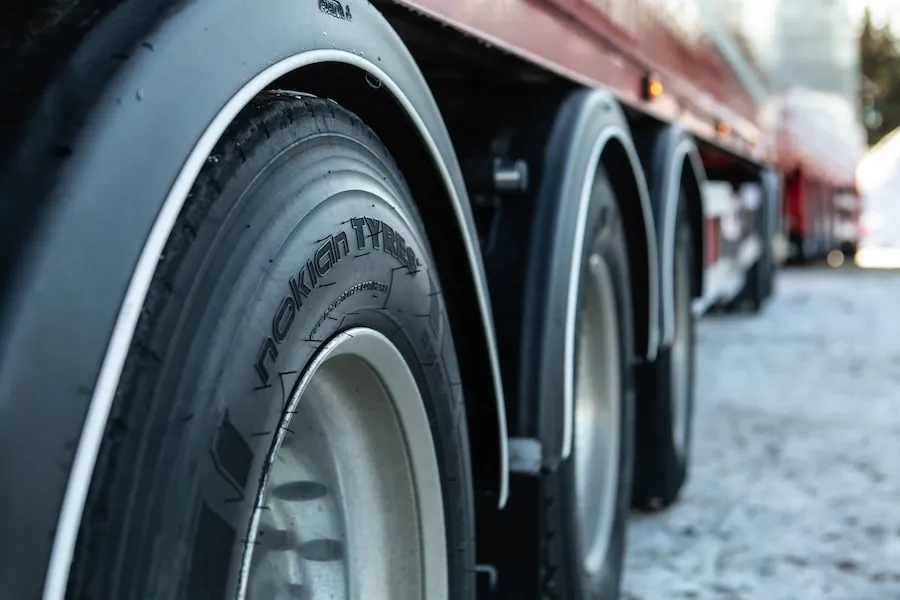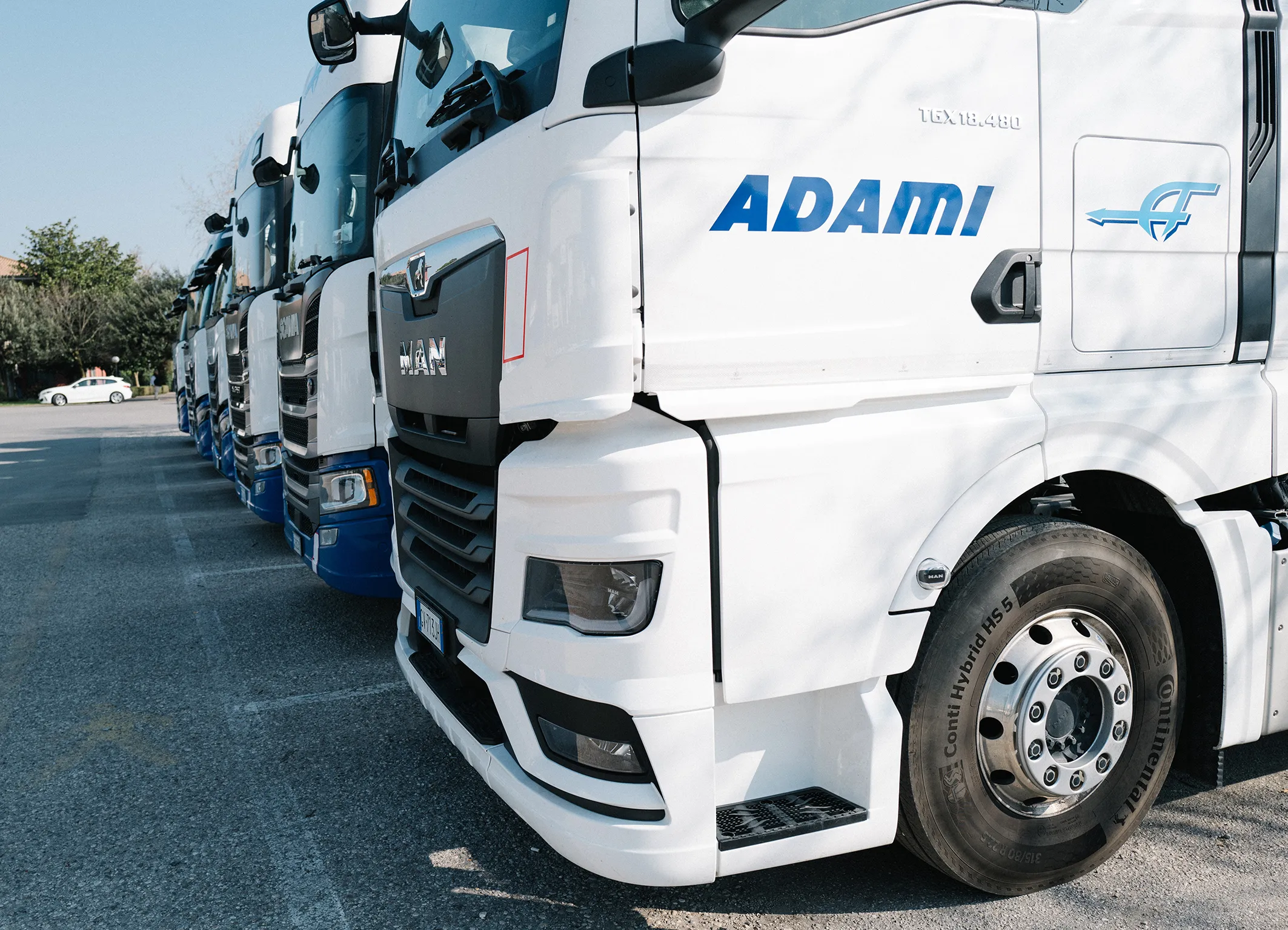
Continental has been supplying the fleet of Italian transport company Adami Trasporti with Conti Hybrid HS5, Conti Hybrid HD5 and Conti Hybrid HT3 since 2023, helping the company significantly reduce its total operating costs and improve the environmental performance of its fleet.
About the Partnership
“With the rolling resistance-optimised tyres, we are reducing our CO2 emissions, saving fuel, and benefiting from high mileage at the same time,” said Stefano Adami, owner at Adami Trasporti. “The fuel savings of 1.5% to 2% are crucial for us, as consumption has a direct impact on our operating costs.” The Verona-based company also uses Continental’s close-knit network of workshops. “The service and support offerings increase operational reliability of our vehicles and enable us to offer consistent and punctual services throughout Europe.”
The family-owned company Adami Trasporti employs 280 people and specialises in food transport for more than four generations. The fleet comprises modern tankers and tank containers specifically designed for the transportation of liquid food products. “With one of the most modern truck and trailer fleets in Europe, we guarantee our customers the highest quality standards and maximum service flexibility,” says Stefano.
The 200 vehicles operate from Verona and three other strategic locations in Castelmassa, Italy; Bratislava, Slovakia; and Beilngries, Germany – along the European and national north-south and east-west transport axes. “We transport liquids such as fruit juices, glucose, wine, milk, chocolate, and cooking oil. Everything is always done in compliance with the highest food safety standards,” says Stefano.
Investing in Technology
The condition of the fleet is of critical importance to the company, considering the sensitive nature of the cargo, the stringent hygiene standards of the food industry, and the strict EU environmental regulations. “We continuously invest a significant portion of our budget in technological innovations,” says Stefano. “These include digital systems for real-time monitoring of transport data and modern vehicles to reduce CO2 emissions to a minimum.”
The measures are supplemented by regular driver training sessions, the expansion of intermodal transport solutions, and the reduction of empty runs. “However, the choice of rolling resistance-optimised tyres is also very important to us.”
Tyres account for only 2% of the operating costs of a commercial vehicle fleet. However, through their influence on fuel consumption, CO2 emissions, and toll charges, they can affect up to 31% of the total costs. For a long time, tyre selection focused primarily on mileage, with cost considerations taking precedence. “This is justified for certain fleet requirements,” explains Kristina Kumme, Strategic Program Manager at Continental. “However, in view of strict EU emission guidelines and the transformation of the logistics industry towards climate-friendly solutions, rolling resistance is becoming increasingly important.”
Sustainability
Climate protection, fuel consumption, and rolling resistance are closely linked. Rolling resistance is an important lever for saving fuel, reducing operating costs, and lowering emissions. Continental is informing fleet operators about these relationships in a recent initiative. “Tyres with optimised rolling resistance reduce fuel consumption and improve profitability,” says Kristina. “They also contribute to reducing CO2 emissions and help transport and logistics companies meet EU environmental requirements and promote more sustainable logistics.”
Adami Trasporti is committed to greater sustainability. “We are always looking for concrete solutions to reduce the impact of our services on the environment,” concludes Stefano. Alongside rolling resistance-optimised tyres from Continental, our sustainability efforts also include alternative drive technologies. “We have integrated LNG-powered vehicles into our fleet, which reduces nitrogen oxide emissions by 70%.” This positions Adami Trasporti as a pioneer in the industry – and, in partnership with Continental, actively contributes to reducing CO2 emissions in the transport sector in line with EU climate targets.