Bridgestone has outlined a range of practical measures that fleet operators can implement to improve efficiency and reduce operating costs in truck operations, as rising fuel prices and increasing pressure on margins continue to affect the transport sector.
Driver Behaviour and Route Planning
According to Bridgestone, driver behaviour remains the most significant factor influencing fuel consumption and vehicle wear. Smooth driving, anticipatory techniques and the effective use of engine braking can help reduce fuel use while extending the lifespan of key components such as brakes and transmissions. Bridgestone emphasises that training and regular feedback are essential to embedding efficient driving practices across fleets.
Route planning is identified as another critical area for optimisation. By factoring in traffic conditions, route profiles and loading times, operators can minimise idle time and improve overall vehicle utilisation. Digital and telematics solutions play a key role in this process by providing data that enables more precise fleet management. Integrated systems such as Bridgestone Fleet Care combine tyre and vehicle data to support predictive maintenance and improve operational planning, contributing to higher vehicle availability and more efficient use of assets.
Tyres
Bridgestone also highlighted tyres as a key lever for efficiency. Beyond safety considerations, tyre selection directly impacts rolling resistance and, consequently, fuel consumption.
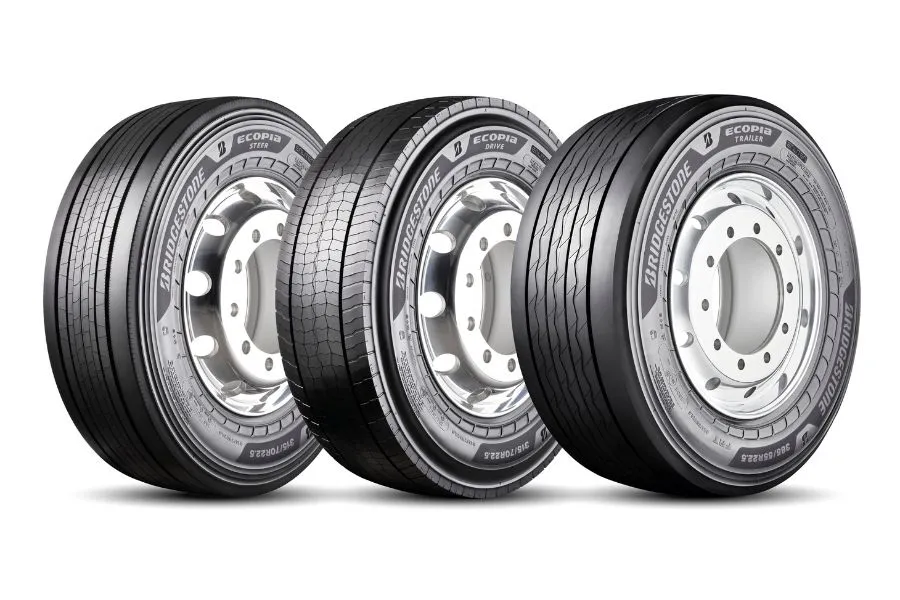
Bridgestone points to its Ecopia range with Enliten technology for long-haul operations, designed to deliver low rolling resistance and high mileage.
For regional use, the Duravis R002 offers durability and even wear, while the M-Series 002 is suited to demanding on- and off-road applications. The Firestone Regional range provides a cost-effective mid-tier solution, balancing efficiency and cost per kilometre.
Maintaining correct tyre pressure is equally important. Deviations can increase rolling resistance, negatively affect handling and accelerate wear. Regular monitoring, ideally supported by automated systems, helps avoid these issues. Sensor-based data integrated into fleet solutions can alert drivers in real time when tyre pressure falls outside the optimal range.
Finally, Bridgestone highlights retreading as an additional opportunity to improve cost efficiency and sustainability. Through its Bandag solutions, casings can be reused multiple times, extending tyre life, reducing cost per kilometre and lowering resource consumption and emissions over the product lifecycle.
Image credit: Bridgestone